Airbus A380-800
A388Airbus · Four-Engine · Production ended
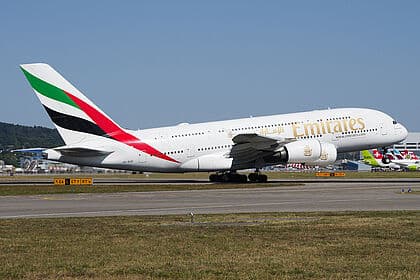
In the wild
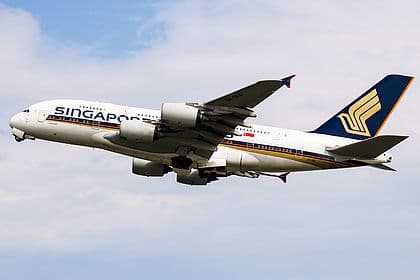
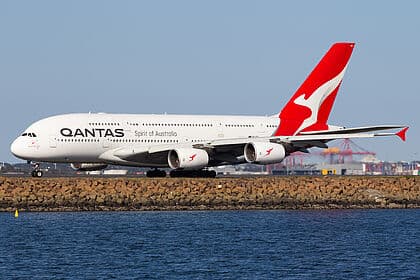
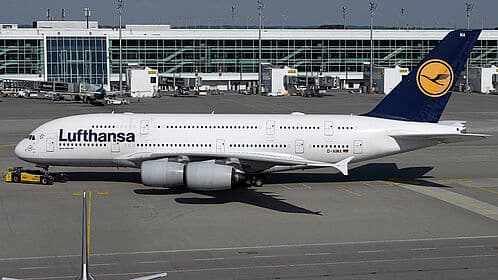
History
The Airbus A380 grew out of studies begun in the late 1980s and 1990s under the label A3XX, as Airbus sought an aircraft to challenge the Boeing 747's decades-long position at the top of the market. Airbus argued that growing traffic and congested hub airports would favour a very large aircraft that moved more passengers per slot. The programme was formally launched as the A380 in December 2000, and the first aircraft flew on 27 April 2005 from Toulouse.
The result was the largest passenger airliner ever built and the only one with a full-length double deck. Its wingspan of just under 80 metres was set deliberately to fit within the 80-metre box of the most demanding airport gate category. After a flight-test and certification campaign, and delays caused chiefly by wiring and production problems in the cabin, the A380 entered service with launch customer Singapore Airlines in October 2007, on the Singapore to Sydney route.
Airlines fitted the aircraft with 400 to more than 500 seats in typical multi-class layouts, and it is certified for up to 853 passengers in an all-economy configuration that no operator has used. Carriers used the extra space for premium products, including first-class suites, bars and, on some Emirates aircraft, showers. The A380 became a flagship and a favourite of passengers, and is widely regarded with affection by enthusiasts.
Commercially, however, it did not meet Airbus's hopes. The market moved toward smaller, efficient twin-engine widebodies such as the 777 and 787 and, later, the A350, which could serve more city pairs nonstop and fill more reliably. Four engines made the A380 costly to run below high load factors, and its size limited the routes and airports that could justify it. Orders stalled, and after Emirates, by far the largest customer, trimmed its final commitments, Airbus announced in 2019 that production would end. The last A380 was delivered to Emirates in December 2021, closing the line after 251 aircraft had been built.
Since then the type's fortunes have partly rebounded in service even as production stopped. Several operators that had planned early retirements reactivated stored A380s during the strong travel demand of the mid-2020s, finding the aircraft's capacity useful on slot-constrained routes. Emirates in particular rebuilt much of its programme around the type and has invested in refurbished cabins to keep the fleet competitive into the 2030s. A proposed efficiency upgrade with large winglets, informally the A380plus, was floated but never launched. The A380 is thus a paradox familiar to aviation followers: a technical landmark and passenger favourite that nonetheless arrived as the industry's economics were turning against very large four-engine aircraft.
Specifications
- First flight
- 2005
- Entered service
- 2007
- Engines
- 4 × Engine Alliance GP7200 or Rolls-Royce Trent 900
- Typical seating
- 525 (2-class)
- Cruise speed
- Mach 0.85
- Range
- 8,000 nm
- MTOW
- 575,000 kg
- Length
- 72.72 m
- Wingspan
- 79.75 m
- Status
- Production ended
Design notes
The A380's defining feature is its full-length upper deck, running the entire length of the fuselage, which no other airliner has. That roughly doubles the usable floor area of a conventional widebody and gives the aircraft its tall, broad cross-section. Two staircases connect the decks, and the structure makes extensive use of aluminium alloys with composites and a glass-fibre-aluminium laminate called Glare in parts of the upper fuselage.
The wing spans just under 80 metres, sized to the 80-metre airport gate limit, and is common across the fleet regardless of engine choice. Uniquely among the types here, the A380 was offered with two engine families: the Engine Alliance GP7200 and the Rolls-Royce Trent 900, both four to an aircraft. Maximum take-off weight is around 575 tonnes, the highest of any airliner in service.
The landing gear is correspondingly complex, with a mix of body and wing gears totalling twenty main wheels plus the nose gear, to spread the load across the pavement. The flight deck uses Airbus fly-by-wire and sidesticks, keeping commonality with other Airbus types. Inside, the wide cabin allowed ten-abreast economy on the main deck and generous premium cabins above; the quiet ride and low cabin noise are frequently praised. The aircraft's size also demanded new airport handling, including dual-level boarding bridges at many hubs.
Notable facts
- The world's largest passenger airliner and the only full-length double-deck jet.
- Entered service with Singapore Airlines in October 2007.
- Certified for up to 853 passengers; typical three-class layouts seat around 500.
- Production ended in 2021 after 251 aircraft were built.
- Powered by four engines from Engine Alliance or Rolls-Royce.
Who flies it
Emirates is overwhelmingly the largest A380 operator, having ordered well over a hundred and built much of its long-haul network around the type; its fleet dwarfs all others combined. Other operators include Singapore Airlines, Qantas, British Airways, Lufthansa, Korean Air, Asiana, Qatar Airways, Etihad, ANA and China Southern, while some early customers such as Air France have since retired the type.
The A380 is used almost exclusively on high-density long-haul routes between major hubs, where its capacity helps airlines add seats without extra slots at congested airports. Typical missions link cities such as Dubai, London, Singapore, Sydney, Los Angeles and Paris. After a wave of pandemic-era retirements, several carriers reactivated the type in the mid-2020s to meet strong demand, so the A380 remains a common sight at the world's largest airports even though production has ended. ANA operates a small, distinctively painted fleet on Honolulu routes.
Flying on one
Few aircraft are as pleasant to fly on as the A380. Its sheer size makes it exceptionally quiet and smooth — turbulence that rattles a single-aisle jet is barely felt — and the two full-length decks give a sense of space nothing else in service matches. The upper deck is the connoisseur's choice: economy there is usually a 2-4-2 layout, and the window pairs even have handy personal stowage bins along the fuselage side. The main deck runs wider, typically ten-abreast in a 3-4-3 economy arrangement, though the enormous cabin width keeps the seats a reasonable size. Overhead bins are large, and because many operators used the A380 as a flagship you may also find bars, spacious lavatories or premium suites, so the onboard product varies a lot by airline. For the best seat, head upstairs: quieter, more intimate, with those side bins. On the main deck, pick a window away from the central staircases and galleys.
Who flies it, and how
5 airline cabin layouts of the Airbus A380-800 in our dataset — expand any to see the cabin breakdown and seat map.
British AirwaysA380-800469 seats14F · 97J · 55W · 303Y
- First (First): 14 seats, 1-2-1 across
- Business (Club World): 97 seats, 2-4-2 across
- Premium Economy (World Traveller Plus): 55 seats, 2-3-2 across
- Economy (World Traveller): 303 seats, 3-4-3 across
Not yet retrofitted to Club Suite — still the older Club World (2-4-2 on the main deck, 2-3-2 upstairs; 44 lower-deck + 53 upper-deck seats). Retrofit to Club Suite expected around late 2026. Economy is 3-4-3 on the main deck and 2-4-2 on the upper deck.
EmiratesA380 (3-class, with First)517 seats14F · 76J · 427Y
- First (First): 14 seats, 1-2-1 across
- Business (Business): 76 seats, 1-2-1 across
- Economy (Economy): 427 seats, 3-4-3 across
Most common Emirates A380 layout (aeroLOPA 388L, ~66 aircraft). Near-identical 3-class-with-First siblings exist at 489 seats (399Y) and 519 seats (429Y). First and Business are both 1-2-1 on the upper deck; economy is 3-4-3 on the main deck.
EmiratesA380 (2-class / high-density)615 seats58J · 557Y
- Business (Business): 58 seats, 1-2-1 across
- Economy (Economy): 557 seats, 3-4-3 across
No-First high-density config (aeroLOPA 388J, ~28 aircraft), the largest-capacity A380 in the fleet. Being retrofitted from 2026 to a 3-class 76J/56W/437Y=569 layout that adds Premium Economy (aeroLOPA 388K); first airframe completed May 2026, 15 planned.
LufthansaA380-800509 seats8F · 78J · 52W · 371Y
- First (First): 8 seats, 1-2-1 across
- Business (Business): 78 seats, 2-2-2 across
- Premium Economy (Premium Economy): 52 seats, 2-4-2 across
- Economy (Economy): 371 seats, 3-4-3 across
8-aircraft fleet (not Allegris). Business Class is being retrofitted from 2026 (Thompson Vantage XL, 1-2-1), reducing Business to 68 -> 499 total. Economy is 3-4-3 on the main deck plus a small 2-4-2 upper-deck rear cabin.
SingaporeA380-800471 seats6F · 78J · 44W · 343Y
- First (Suites): 6 seats, 1-1 across
- Business (Business): 78 seats, 1-2-1 across
- Premium Economy (Premium Economy): 44 seats, 2-4-2 across, 38″ pitch
- Economy (Economy): 343 seats, 3-4-3 across, 32″ pitch
Current 2017-onward 'V3' cabin (all SIA A380s). Six fully enclosed Suites (1-1) on the forward upper deck. aeroLOPA lists 470 total (342Y); SIA's published figure and most sources give 471 (343Y).
Variants
- A380-800 — The only variant produced
- A380plus — Proposed efficiency upgrade with large winglets; never launched
How to spot it
The A380 is essentially unmistakable: it is the only airliner with a full-length double deck, giving it a tall, whale-like fuselage with two clear rows of windows running the entire length. It also has four engines and an enormous wing spanning close to 80 metres.
The main confusion is with the Boeing 747, the other large four-engine type. The key difference is the upper deck: the 747's upper deck is a partial hump that tapers back into the fuselage roughly a third of the way along, whereas the A380's upper deck runs unbroken from nose to tail. The A380 also has a taller, broader body and a shorter, less pointed nose than the 747. From below, the A380's very wide wing and four engines confirm the identification.
Frequently asked
How do you tell an Airbus A380 from a Boeing 747?
Both are large four-engine aircraft, but the A380 has a full-length double deck, with two rows of windows running the entire fuselage, while the 747 has only a partial upper deck that forms a hump near the front and tapers into a single-deck body behind it. The A380 is also taller and wider, with a blunter nose. If the upper windows run all the way to the tail, it is an A380.
Why did Airbus stop making the A380?
Sales fell short as airlines shifted to smaller, more efficient twin-engine widebodies that could serve more routes nonstop and fill more reliably. The A380's four engines and large size made it economical only at high load factors on a limited set of routes. After its largest customer, Emirates, reduced its final orders, Airbus announced in 2019 that it would end production, delivering the last aircraft in 2021.
How many passengers can an A380 carry?
It is certified for up to 853 passengers in an all-economy layout, though no airline uses that configuration. In practice, typical three- or four-class cabins seat roughly 470 to 525, with the extra space often given over to premium products such as first-class suites and bars. Emirates and a few others fitted particularly elaborate cabins.
Is the A380 still flying if production ended?
Yes. Although Airbus stopped building it in 2021, many A380s remain in service, and several operators reactivated stored aircraft during the strong travel demand of the mid-2020s. Emirates in particular has kept a very large fleet flying and refurbished cabins to keep them current, so the type is expected to operate into the 2030s.
What engines does the A380 use?
The A380 was offered with a choice of two engine families, both installed four to an aircraft: the Engine Alliance GP7200 and the Rolls-Royce Trent 900. Engine Alliance is a joint venture between General Electric and Pratt and Whitney. Operators chose between them, so the fleet is split between the two types.
In-depth comparisons
Compare with
Specs are approximate, compiled from public sources. See our editorial policy.