The plane Airbus didn't want to build: the story of the A350
The first A350 Airbus announced was a warmed-over A330, and its biggest customers said so in public. Getting embarrassed into a redesign gave the world one of the best long-haul airliners ever built. This is the full story, with the documentary at the top.
Chapters in the video

The band-aid
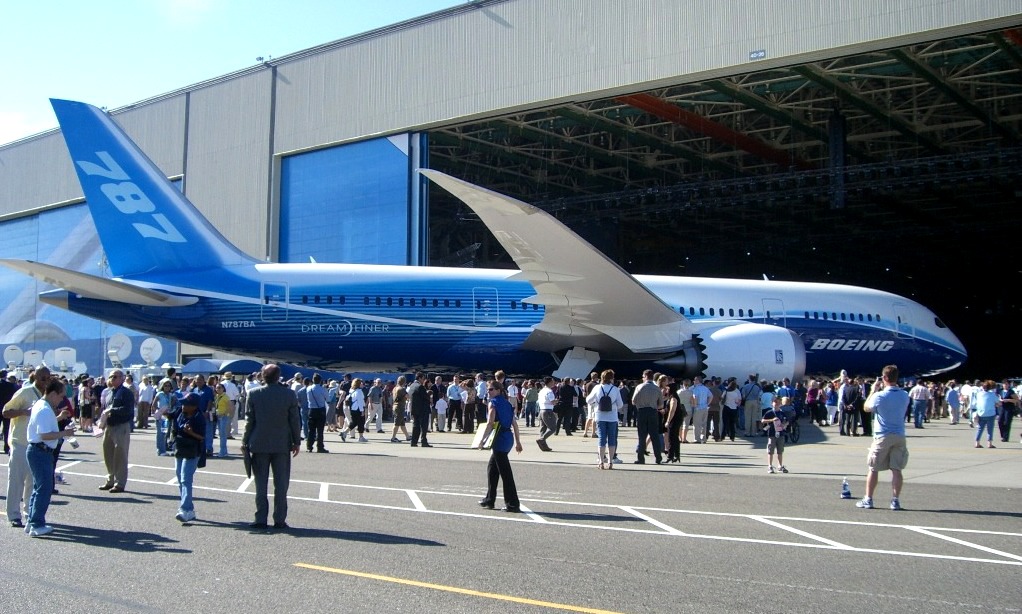
In 2004 Boeing launched the 787 Dreamliner: a clean-sheet airliner built mostly from carbon fiber, promising fuel burn roughly 20% better than the aircraft it replaced. Airlines lined up for it.
Airbus's first answer was cheaper and faster. It would take the A330, a design from the 1980s, give it new engines and composite wings, and call it the A350. On paper the logic held: lower development cost, earlier delivery, and an airframe airlines already knew.
The customers saw it differently. At the ISTAT industry conference on 28 March 2006, with hundreds of airline and leasing executives in the room, Steven Udvar-Hazy, head of the leasing giant ILFC and the most powerful buyer of aircraft in the world, called the A350 "a band-aid reaction to the 787". The head of the other big lessor backed him publicly. Singapore Airlines' chief executive added that if Airbus was designing a new wing and a new tail, it might as well go the whole hog and design a new fuselage too.
The message from the people who would buy the aircraft was blunt: this is not good enough, and if you build it, we will buy Boeing.
The $15 billion do-over
Airbus gave in. In July 2006 it scrapped the A330-based design and announced a new aircraft, the A350 XWB, for Extra Wide Body: a clean-sheet fuselage, nine-abreast economy seating, and a development bill that grew to around $15 billion, roughly three times the original plan. Estimates of the final figure vary, but the direction was clear.
Four days after the new design was unveiled, Singapore Airlines, one of the loudest critics of the first version, ordered twenty.
The name carried a message of its own. Airbus deliberately made the cabin a few inches wider than the 787's, so it could offer nine seats across at a seat width Boeing could only match by squeezing. "Extra Wide Body" was, in effect, a shot at Seattle. It is the reason A350 economy seats are typically around 18 inches wide against the 787's 17.3; see our A350-900 vs 787-9 comparison.
Panels, not barrels
Both the A350 and the 787 are mostly composite; the A350 is 53% composite by weight. But they are built in opposite ways.
Boeing winds each 787 fuselage section as one giant piece, a barrel. Airbus went the other way and builds each section from four large carbon-fiber panels fastened to frames. The reasoning was largely practical. If a catering truck damages a panel, the panel is replaced; damage to a one-piece barrel is a much bigger repair. Panels also let Airbus tune the skin thickness section by section, saving weight wherever the structure allowed.
The wing is just as unusual. Each upper wing cover is a single piece of carbon fiber about 32 meters long, among the largest single composite parts ever made for a civil aircraft. And the wing changes shape in flight: its trailing edge varies its camber through the cruise, staying efficient as fuel burns off and the aircraft gets lighter.

One engine
Every A350 ever built flies with the same engine: the Rolls-Royce Trent XWB. There is no General Electric option and no Pratt & Whitney option, which is unusual for a widebody.
Part of the reason was commercial. GE already powered the Boeing 777-300ER exclusively, and building a bigger engine for the A350-1000 would have meant competing with its own most successful product. GE declined, and Rolls-Royce got the whole aircraft. Rolls-Royce markets the Trent XWB as the most efficient large aero engine in the world; that is the manufacturer's claim, but with a fan about three meters across moving more than a metric ton of air a second at takeoff, it is a serious machine either way.

Into the air
The A350 XWB first flew from Toulouse on 14 June 2013. European certification followed in September 2014 and the FAA's two months later, and on 15 January 2015 Qatar Airways flew the first commercial A350 service, Doha to Frankfurt. The longer A350-1000 entered service in 2018, again with Qatar.
One member of the family never made it. The smallest version, the A350-800, was quietly dropped as Airbus moved its customers up to the larger models or across to the A330neo. The family that took the market is really two aircraft: the A350-900 and the A350-1000. Our A350-900 vs A350-1000 comparison covers how they differ.

The longest flight
Singapore Airlines came back with a demanding request: nonstop Singapore to New York, more than 9,500 nautical miles and close to nineteen hours in the air. As of late 2026 it is still the longest scheduled flight in the world; Qantas's Project Sunrise A350-1000s, built for Sydney to London, are not due in service until late 2027.
Airbus's answer was the A350-900ULR, for Ultra Long Range. Its most striking detail: it carries about 24,000 extra liters of fuel without a single additional fuel tank. Airbus changed the fuel system so the aircraft could use volume inside the wing that was already there. The world's longest flight exists, in part, because somebody re-plumbed the wing. Singapore Airlines flies it as SQ23 and SQ24, with only business and premium economy on board.

The paint war
The strangest chapter came in 2021, when Qatar Airways, the launch customer, began grounding its own A350s over their paint.
The problem sat in the layers of the skin. Under the paint is a copper mesh for lightning protection, and under that the carbon fiber, three materials that expand and contract at different rates. On some aircraft the paint cracked and peeled, in places exposing the mesh. Qatar's regulator grounded more than twenty of the airline's A350s, and Qatar sued Airbus in London for more than $1 billion.
Airbus maintained the issue was cosmetic, not a safety risk, and then did something without modern precedent: it began canceling Qatar's orders for other aircraft while the case was in court. A launch customer and a manufacturer were fighting openly over an airliner already in service.
In February 2023 it ended in a confidential settlement. Neither side admitted fault, the canceled orders were reinstated, and the aircraft returned to service.

Haneda
On 2 January 2024, Japan Airlines flight 516, an A350-900 registered JA13XJ, collided on landing at Tokyo Haneda with a Japan Coast Guard aircraft on the runway and caught fire. It was the first A350 ever lost.
For years the open question about composite airliners had been how a carbon-fiber fuselage would behave in a real fire. That night answered it: the structure held long enough for all 379 people on board to evacuate. Five of the six people aboard the Coast Guard aircraft were killed, and that loss is part of the story too. The Japan Transport Safety Board's investigation is the authoritative account of the accident.

The freighter, and where it stands
More than 1,400 A350s have been ordered, and the family is still growing. At the end of September 2026 the A350F freighter made its maiden flight from Toulouse, about four hours in the air. It has what Airbus describes as the largest cargo door ever fitted to a production freighter, more than 100 orders, and first deliveries planned for 2027, though industry analysts have questioned whether that date will hold. Twenty of those orders came from Atlas Air, the world's largest operator of Boeing freighters.
Not bad for a band-aid.
You can watch A350s flying right now on the live tracker, see every airline's layout on the A350-900 and A350-1000 pages, or compare the A350-1000 with its biggest rival in A350-1000 vs 777-9.
Sources
- Udvar-Hazy "band-aid" remarks: ISTAT conference, 28 March 2006 (Flight International and Reuters coverage)
- A350 XWB launch and Singapore Airlines order: Airbus and Singapore Airlines press releases, July 2006
- Composite share, variable camber and panel construction: Airbus A350 XWB technical briefings
- Trent XWB: Rolls-Royce
- Certification and entry into service: EASA (September 2014), FAA (November 2014); Qatar Airways first service 15 January 2015
- A350-900ULR fuel system: Airbus
- Qatar Airways v Airbus: High Court of England and Wales filings; settlement February 2023
- JAL516: Japan Transport Safety Board
- A350F first flight and orders: Airbus Newsroom, September 2026