Boeing 727-200
B722Boeing · Narrowbody · Production ended
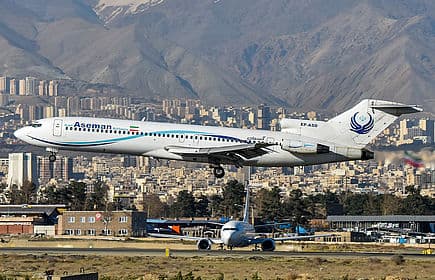
In the wild
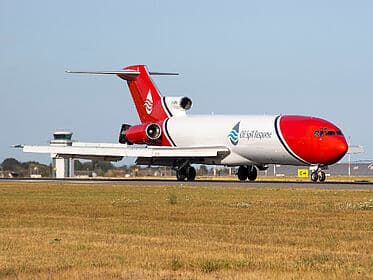
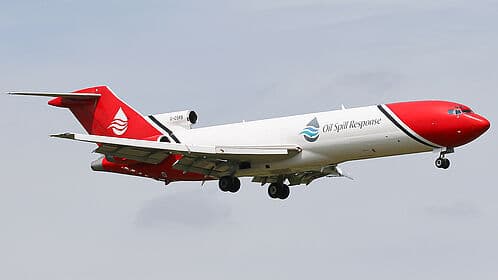
History
The Boeing 727 is a narrowbody trijet developed to serve shorter routes and smaller airports than Boeing's larger 707. Boeing launched the program in 1960 with orders from Eastern Air Lines and United Air Lines, and the first 727 flew on 9 February 1963, entering service with Eastern in early 1964. The design used three rear-mounted Pratt and Whitney JT8D engines and advanced wing high-lift devices to combine jet speed with the ability to operate from relatively short runways.
The original model, retrospectively the 727-100, was soon joined by a stretched version. The 727-200 first flew in July 1967 and entered service with Northeast Airlines in December 1967, lengthening the fuselage by about six metres and increasing seating accordingly. A later development, the 727-200 Advanced, added higher operating weights, more fuel and greater range, and became the definitive version of the aircraft. The -200 series went on to account for the majority of all 727s built.
Through the 1960s and 1970s the 727 became a mainstay of US domestic aviation and a common sight internationally. Its ability to serve airports without extensive ground equipment, thanks to built-in airstairs, and its strong short-field performance made it versatile across a wide range of routes. It sold in large numbers: production ran until 1984 and totalled 1,832 aircraft, and the 727 is widely cited as the first jet airliner to exceed 1,000 sales, remaining the best-selling jetliner until it was overtaken by the Boeing 737.
The 727's rear ventral airstair, which folds down beneath the tail, features in one of aviation's best-known unsolved cases. In November 1971 a hijacker travelling under the name Dan Cooper, later widely known as D.B. Cooper, commandeered a Northwest Orient 727, collected a ransom of 200,000 US dollars, and parachuted from the lowered aft airstair while the aircraft was in flight; he was never identified. The incident prompted the fitting of a device, known as the Cooper vane, that prevents the aft airstair from being deployed while airborne.
The 727's commercial decline was driven mainly by economics and regulation. Its three older-generation engines burned more fuel than the newer twin-engine jets that succeeded it, and tightening noise rules made the type expensive to operate without hush kits or re-engining. US carriers progressively withdrew the 727 from passenger service through the 1990s and into the early 2000s; Delta Air Lines, among the last major US operators, retired its final 727s from passenger service in 2003. Many airframes went on to second careers as freighters, and a dwindling number remain in cargo, private or government use today.
Specifications
- First flight
- 1967
- Entered service
- 1967
- Engines
- 3 × Pratt & Whitney JT8D
- Typical seating
- 155 (2-class)
- Cruise speed
- Mach 0.82
- Range
- 2,550 nm
- MTOW
- 95,000 kg
- Length
- 46.69 m
- Wingspan
- 32.92 m
- Status
- Production ended
Design notes
The 727's defining feature is its three-engine tail arrangement. Two Pratt and Whitney JT8D engines are mounted in pods on either side of the rear fuselage, while a third is buried in the tail and fed by an air intake at the base of the vertical fin through an S-shaped duct. The horizontal stabiliser sits at the top of the fin in a T-tail layout, clear of the engine exhaust.
The wing was designed for both cruise efficiency and low-speed performance. It used a combination of leading-edge slats and Krueger flaps together with triple-slotted trailing-edge flaps, an unusually elaborate high-lift system for its time, giving the 727 good short-field capability and a steep approach ability. This let it serve shorter runways and airports that other jets of its size could not easily use.
For self-sufficiency at less-equipped airports, the 727 carried built-in airstairs, including a distinctive retractable stairway under the tail, so it could load and unload passengers without ground stairs or jet bridges. The fuselage shared its upper cross-section and six-abreast seating with the 707 and 737, which gave Boeing manufacturing commonality across the three types. An auxiliary power unit allowed the aircraft to operate independently of ground power.
Notable facts
- A T-tailed trijet whose center engine feeds through an S-duct in the tail.
- Its built-in airstairs (including a rear ventral stair) let it work airports without ground equipment.
- For years the best-selling jetliner in the world, until the 737 and later types overtook it.
- Retired from mainstream passenger service; a handful lingered as freighters and executive jets.
Who flies it
In its heyday the 727 was operated by nearly every major US airline, including Eastern, United, American, TWA, Delta, Northwest and Braniff, as well as many carriers in Europe, Latin America, Asia and Africa. It served as a workhorse of domestic trunk networks and shorter international routes for decades.
As passenger operations wound down, large numbers of 727s were converted into freighters, and cargo operators kept the type flying well after airlines had retired it from passenger service. Today the 727 has essentially disappeared from scheduled passenger flying; only a small and shrinking number remain in service as freighters or in private, charter and government roles, often in parts of the world with less stringent noise regulation. Its legacy is that of one of the most widely produced and widely flown jetliners of its era.
Flying on one
Flying on a 727 today is an exercise in nostalgia rather than a travel option — the type has long since left scheduled passenger service, and the few that still fly do so as freighters, private aircraft or occasional heritage charters. When it ruled the skies, the 727-200 was a six-abreast, 3-3 narrowbody with three engines clustered at the tail, which gave the rear cabin a distinctive, hearty roar and made the front rows the quiet refuge. Its built-in airstairs let it work airports without jet bridges, part of its rugged appeal. By modern standards it was loud, the overhead bins were small, and the cabin lacked every comfort feature travellers now take for granted. Yet for enthusiasts the sound of three low-bypass engines and the classic T-tail silhouette are exactly the point. If you ever get the chance to ride one, sit as far forward as possible for the least noise, and simply enjoy a piece of living aviation history rather than judging it on comfort.
Variants
- 727-100 — Original, shorter fuselage
- 727-200 Advanced — Higher weights and more range
How to spot it
The giveaway is the three-engine tail arrangement combined with a T-tail. Two engines sit in pods on the sides of the rear fuselage, and a third is buried in the tail, fed through an S-duct whose intake sits at the base of the vertical fin. The horizontal stabiliser is mounted at the top of the fin, well above the engines.
This layout separates the 727 from twin-engine rear-engined jets such as the DC-9 and MD-80, which look similar but have only two engines and no centre intake at the fin base. It also differs from four-engine jets like the 707 and DC-8, whose engines hang under the wings. The most similar-looking types are other trijets, notably the Hawker Siddeley Trident and the Soviet Tupolev Tu-154.
Frequently asked
Why does the Boeing 727 have three engines?
The trijet layout gave the 727 enough thrust for good short-field performance and climb while suiting the range and operating rules of the 1960s, when twin-engine jets faced tighter restrictions on longer routes. Three smaller engines also helped it serve shorter runways than a comparable four-engine jet. All three are mounted at the rear, which keeps the wing clean.
Is the Boeing 727 still flying?
It has effectively disappeared from scheduled passenger service, having been retired by mainstream airlines by the early 2000s. A small and shrinking number still operate as freighters or in private, charter and government roles, though tightening noise rules continue to reduce their numbers.
What is the D.B. Cooper connection to the 727?
In November 1971 a hijacker using the name Dan Cooper, later widely known as D.B. Cooper, seized a Northwest Orient 727, took a ransom and parachuted from the aircraft's rear airstair in flight, never to be identified. The case led Boeing to fit the Cooper vane, a device that stops the aft airstair from being lowered while the aircraft is airborne.
What is the difference between the 727-100 and the 727-200?
The 727-200 is a stretched version of the original 727-100, with a fuselage lengthened by about six metres and higher passenger capacity. A later 727-200 Advanced added more fuel, higher weights and greater range. The -200 series was built in far larger numbers than the -100.
Why was the 727 retired from passenger service?
Its three older engines used more fuel than the twin-engine jets that replaced it, and tightening noise regulations made it costly to operate without modifications. As more efficient and quieter aircraft such as the Boeing 757 and 737 became available, airlines phased the 727 out of passenger fleets, mostly by the early 2000s.
How many 727s were built?
Boeing built 1,832 727s between the early 1960s and 1984. It is widely cited as the first jet airliner to pass 1,000 sales and was the best-selling jetliner until overtaken by the Boeing 737. The 727-200 series accounted for most of that total.
Compare with
Specs are approximate, compiled from public sources. See our editorial policy.