Airbus A300-600
A306Airbus · Widebody · Production ended
In the wild
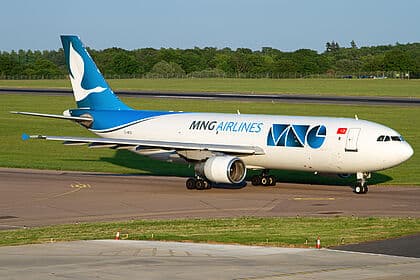
History
The Airbus A300-600 is the final and most refined passenger generation of the A300, the aircraft that launched Airbus itself. The original A300 flew in 1972 as the world's first twin-engine widebody, a bold choice at a time when long-range flying was dominated by three- and four-engine jets, and it established the wide, twin-aisle, eight-abreast cabin that remains an Airbus signature. Sales were slow at first but built steadily through the 1970s, and the aircraft proved the concept of the big twin that later types such as the 767 and 777 would carry forward.
By the early 1980s Airbus had developed the A310, a shorter, modernised derivative with a new wing and a two-crew glass cockpit. It then fed those advances back into the full-length aircraft to create the A300-600, which first flew in 1983 and entered service in 1984 with Saudia. The -600 adopted the A310's two-crew cockpit and updated systems, a revised rear fuselage that allowed extra seating, and more efficient engines, offered as a choice of the General Electric CF6-80C2 or the Pratt & Whitney PW4000. An increased-range version, the A300-600R, added a rear trim fuel tank to extend its reach.
In service the A300-600 was valued for its wide cabin and strong short-field performance, which suited high-frequency regional and medium-haul routes. It was popular in Europe, the Middle East, and especially in Asia, where carriers such as Japan Airlines, All Nippon Airways, and Thai Airways used it heavily on dense domestic and regional networks. American Airlines operated a large A300-600R fleet on US and Caribbean routes. It never sold in the numbers of later Airbus types, but it kept the A300 line viable and helped cement Airbus as a serious rival to Boeing.
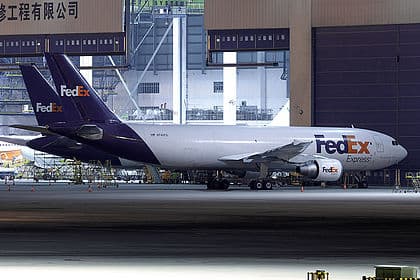
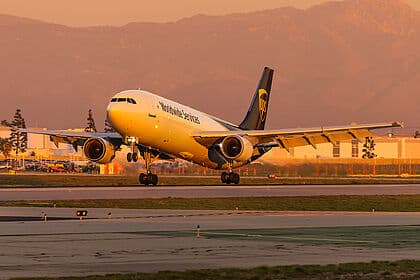
Passenger sales faded through the 1990s as newer twins offered better economics, but the A300 found a durable second life in cargo. Airbus offered dedicated A300-600F freighters and, as passenger aircraft aged, many were converted, and express operators embraced them. Airbus ended all A300 and A310 production in 2007, delivering the final aircraft, a freighter, in July that year and closing a line that had run for some 35 years. As of 2026 the A300-600 has essentially vanished from passenger service but remains a common cargo aircraft, above all with FedEx and UPS, whose large fleets keep the type a familiar sight at freight ramps decades after its debut. Across all A300 and A310 versions more than 800 were built, a modest total by later standards but the foundation on which Airbus's entire widebody business was raised.
Specifications
- First flight
- 1983
- Entered service
- 1984
- Engines
- 2 × GE CF6-80C2 or Pratt & Whitney PW4000
- Typical seating
- 266 (2-class)
- Cruise speed
- Mach 0.78
- Range
- 4,050 nm
- MTOW
- 170,500 kg
- Length
- 54.08 m
- Wingspan
- 44.84 m
- Status
- Production ended
Design notes
The A300-600 is a wide, twin-engine, twin-aisle widebody whose cabin cross-section, about 5.6 metres across, seats eight abreast and became the template for every later Airbus widebody up to the A330 and A340. Although its shape looks conventional, the -600 packed in a series of upgrades over the original A300, most of them borrowed from the smaller A310.
Chief among these was the flight deck: the A300-600 adopted the A310's two-crew glass cockpit with electronic displays, eliminating the flight engineer that the earliest A300s required and giving the two aircraft a common type rating. The rear fuselage was revised, in effect using the A310's aft section, which allowed a slightly longer cabin and more seats within the same overall length. The wing remained the proven A300 aluminium design without winglets.
Power came from two large high-bypass turbofans, the General Electric CF6-80C2 or the Pratt & Whitney PW4000, in roughly the 60,000 lbf class, and each main gear leg carried a four-wheel bogie. Unlike the later A320 and A330, the A300-600 kept a conventional control yoke rather than fly-by-wire sidesticks, marking it as a product of an earlier generation. The freighter versions added a large main-deck cargo door and a strengthened floor, the feature that has kept the type working long after its passenger career ended.
Notable facts
- The A300 was the world's first twin-engine widebody airliner and the first Airbus product.
- The A300-600 was the final, most-developed passenger generation, with a two-crew glass cockpit.
- Shares its two-crew cockpit and much of its systems design with the smaller A310.
- The last A300 (a freighter) was delivered in July 2007, ending the line after some 35 years.
- Its wide cabin and short-field ability made it popular for regional high-density flying and, later, cargo.
Who flies it
As of 2026 the A300-600 has all but left passenger service and survives mainly as a freighter. In its passenger years it was a workhorse for Asian carriers such as Japan Airlines, All Nippon Airways, and Thai Airways, for American Airlines in the United States, and for a range of European, Middle Eastern, and African operators, typically on short- and medium-haul high-density routes. Those passenger fleets have now almost entirely retired. The type's enduring role is cargo: the express integrators FedEx and UPS operate large fleets of A300-600F and converted freighters, hauling parcels and general freight across their domestic and regional networks. A scattering of other cargo and specialist operators fly it too. Where the A300-600 still appears in 2026, it is overwhelmingly in freighter colours at a cargo hub rather than at a passenger gate.
Flying on one
Passenger flights on an A300-600 are now uncommon, because the type has largely moved to cargo work — it is a mainstay of express freight fleets such as FedEx and UPS — and only a few operators still fly it with passengers. When it does carry them, the A300-600 offers a comfortable eight-abreast 2-4-2 economy cabin, the same passenger-friendly layout as the A330, with side pairs for couples and only two true middle seats per row. As one of the earliest widebody twins, its cabin is of an older generation, so pressurisation, humidity and overhead-bin size are modest by modern standards, and the specific product depends entirely on the remaining operators. The ride is smooth and quiet. For the best seat, take a 2-4-2 window pair well forward of the aft galleys. For most travellers today, though, an A300-600 overhead is more likely to be hauling parcels than passengers, and a passenger flight on one is an increasingly rare, slightly nostalgic experience.
Variants
- A300-600R — Increased-range version with a rear trim fuel tank
- A300-600F / A300-600RF — Freighter versions; long the backbone of FedEx and UPS fleets
- A300B4 — Earlier-generation three-crew variant
How to spot it
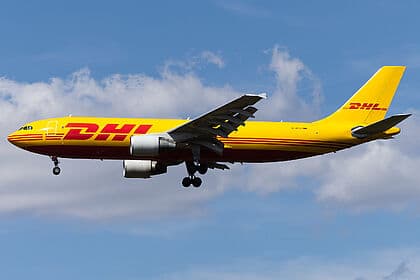
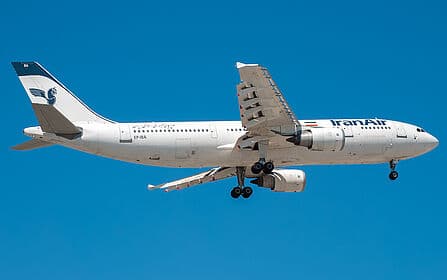
The A300-600 is a medium-size, twin-engine widebody with a wide, eight-abreast body and a plain, winglet-less wing. Its closest look-alike is the Boeing 767, which occupies the same size class, but the A300 is the wider of the two, seating eight abreast to the 767's seven, and has a shorter, more upright-looking fuselage, while the 767 is longer and slimmer. The A300-600's smaller sibling, the A310, is very similar from the front but noticeably shorter, with wingtip fences the A300 lacks. Both A300 and A310 share the same two-crew cockpit and nose. Against later Airbus widebodies like the A330, the A300 is clearly smaller and has no winglets or Sharklets. As of 2026 most examples wear cargo-airline liveries and lack cabin windows along much of the fuselage.
Frequently asked
Does anyone still fly the A300-600 in 2026?
Not really in passenger service, where it has almost entirely retired. As a freighter it remains common, above all with the express integrators FedEx and UPS, which operate large A300-600F and converted fleets. A handful of other cargo and specialist operators also fly it, so the type is still a familiar sight at freight ramps.
How do you tell an A300-600 from a Boeing 767?
Both are twin-engine, twin-aisle widebodies of similar size, but the A300 is wider, seating eight abreast against the 767's seven, and looks shorter and more upright, while the 767 is longer and slimmer. Neither typically has winglets, so body proportions are the key. Up close the A300 wears the smooth Airbus nose and windscreen.
What is the difference between the A300 and the A310?
The A310 is a shorter, modernised derivative of the A300 with a new, more advanced wing and a two-crew glass cockpit, developed in the early 1980s. The A300-600 later borrowed the A310's cockpit and rear fuselage, so the two share much technology, but the A300-600 has the longer body. From the front they look alike; length and the A310's wingtip fences separate them.
Why was the A300 retired from passenger service?
Newer twin-engine widebodies offered better fuel efficiency and range, so airlines gradually replaced their A300s from the 1990s onward, and Airbus ended production in 2007. The A300's relatively short range and older systems made it uncompetitive for passengers against types like the A330 and 767. It remained useful for cargo, which is why so many became freighters.
Why is the A300 important in aviation history?
The original A300 was the world's first twin-engine widebody airliner and the very first product of Airbus, proving both that a big twin could work and that a new European consortium could challenge the established American manufacturers. Its wide, eight-abreast cabin became the basis for later Airbus widebodies. The A300-600 was the final, most-developed passenger version of that pioneering line.
Compare with
Specs are approximate, compiled from public sources. See our editorial policy.