ATR 42
AT45ATR · Regional · In production
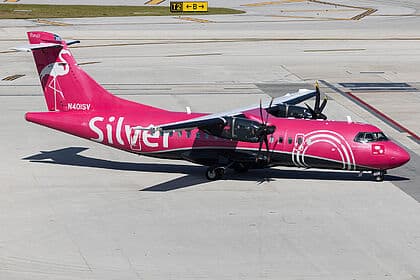
In the wild
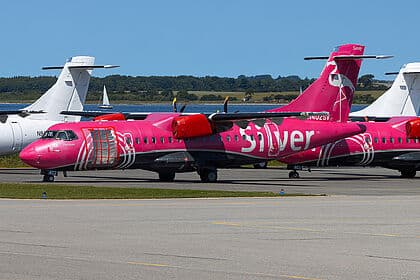
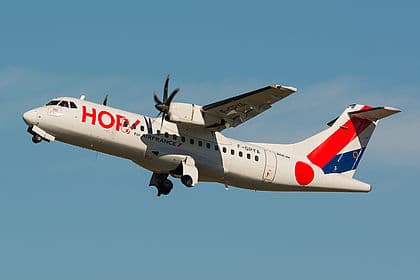
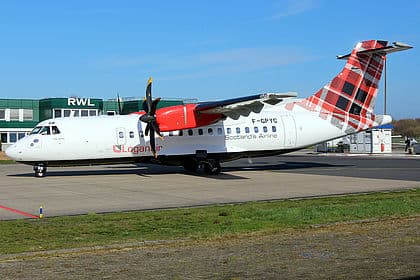
History
The ATR 42 is a twin-turboprop regional airliner that has been in continuous production, in successive forms, since the 1980s. It is the founding product of ATR, a joint venture formed in 1981 between France's Aérospatiale and Italy's Aeritalia to build regional turboprops, and the 42 in its name refers to its original seating of around 42 passengers. The aircraft first flew in 1984 and entered service in 1985 with the French carrier Air Littoral, aimed at short, thin routes where small, economical aircraft made sense.
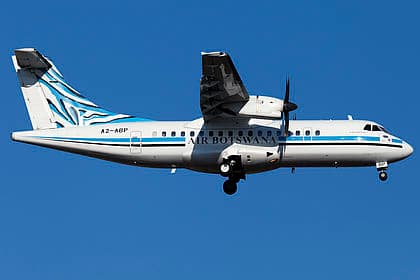
The design is a conventional high-wing turboprop with a T-tail, twin Pratt & Whitney Canada engines, and a fuselage cross-section shared with the stretched ATR 72 that followed. The high wing keeps the propellers and engines clear of debris and gives good ground clearance, useful at the small, sometimes unpaved airfields the type was built to serve. Over the decades ATR progressively improved it, moving through the original -300, the more powerful -400, the -500 with six-blade propellers and updated engines, and the current -600, which introduced a glass cockpit and further refinements.
The ATR 42 has always been sold alongside its larger sibling, the ATR 72, and the two share a great deal of structure, systems, and a common pilot type rating, which lets operators mix the two sizes cheaply within one fleet. The 72 outsells the smaller 42 because many regional routes suit its higher capacity, but the 42 fills an important niche for thinner routes and smaller airfields. Its main competitor was long the De Havilland Canada Dash 8, and today the ATR family and the larger Dash 8-400 are the principal Western regional turboprops still in service.
As of 2026 the ATR 42 remains in production as the ATR 42-600, which ATR describes as effectively the only new-build airliner in the 30-to-50-seat class, a segment jet manufacturers have abandoned. It is flown by regional and commuter airlines across Europe, Africa, Asia, the Pacific, and the Americas, often on subsidised or remote routes that larger aircraft cannot serve economically. ATR has also developed a short-takeoff-and-landing version, the ATR 42-600S, to widen the type's appeal to airfields with very short runways. With turboprops offering much lower fuel burn than regional jets on short sectors, and growing attention to emissions, the ATR 42 occupies a durable niche, and the family is likely to remain in production for years to come. More than 1,600 aircraft across the ATR 42 and 72 range have been delivered since the 1980s, making the family comfortably the best-selling Western regional turboprop of its era.
Specifications
- First flight
- 1984
- Entered service
- 1985
- Engines
- 2 × Pratt & Whitney Canada PW127
- Typical seating
- 48 (2-class)
- Cruise speed
- Mach 0.42
- Range
- 716 nm
- MTOW
- 18,600 kg
- Length
- 22.67 m
- Wingspan
- 24.57 m
- Status
- In production
Design notes
The ATR 42 is a deliberately simple, rugged high-wing turboprop optimised for short sectors rather than speed. The high, straight wing is mounted on top of the fuselage, keeping the two Pratt & Whitney Canada PW127 engines and their propellers well clear of the ground, which protects them from debris and suits unpaved or poorly surfaced runways. A tall T-tail holds the horizontal stabiliser up out of the propeller wash. The result is an aircraft that can operate from small, basic airfields with minimal ground support.
Power comes from two PW127-series turboprops driving, on current -600 aircraft, six-blade propellers that are quieter and more efficient than the earlier four-blade units. The engines are flat-rated so that they hold power in hot and high conditions, helping short-field performance. Cruising speed is far below that of a jet, around 300 knots, because the aircraft is designed for short hops where climb and descent dominate and outright speed matters little.
The current ATR 42-600 introduced a modern glass cockpit with electronic displays, replacing the analogue instruments of earlier versions, and shares its type rating with the larger ATR 72 so crews can fly both. The cabin seats up to around 48 in a four-abreast, single-aisle layout. Construction is largely aluminium, straightforward and easy to maintain, in keeping with the aircraft's workaday role.
Notable facts
- A twin-turboprop regional airliner seating around 48, sharing its cross-section with the larger ATR 72.
- The current ATR 42-600 is effectively the only new-build airliner in the 30-to-50-seat class.
- Powered by two Pratt & Whitney Canada PW127 turboprops driving six-blade propellers.
- Well suited to short, thin routes and to short or unpaved runways.
- First flew in 1984 and entered service in 1985; the design has been progressively updated ever since.
Who flies it
As of 2026 the ATR 42 is flown by regional and commuter airlines on nearly every continent, typically on short, thin routes that larger aircraft cannot fill. Operators are spread across Europe, Africa, Asia, the Pacific islands, and the Americas, and include national carriers serving remote domestic points, small independent commuters, and government-subsidised essential-service routes. Because the type can use short and basic airfields, it is a lifeline aircraft for island chains, mountainous regions, and lightly populated areas, carrying passengers, mail, and light freight where road or larger-aircraft links are impractical. Airlines often operate it alongside the larger ATR 72, mixing the two sizes on one shared crew rating to match capacity to demand. Unlike the classic types in this group, the ATR 42 is still being built new, so its fleet includes both decades-old and brand-new aircraft.
Flying on one
The ATR 42 is the smaller sibling of the ATR 72, and flying on one is classic short-hop turboprop travel — think island chains, thin regional routes and quick connections. The cabin seats around forty-eight passengers four-abreast in a 2-2 layout, so there are no middle seats, but as a propeller aircraft it brings more noise and a gentle vibration than a jet, most noticeable in the rows level with the props. Being small, its overhead bins are modest, and larger roll-aboards are routinely gate-checked at the foot of the airstairs and returned there on arrival. It cruises low and slow, which can make for a livelier ride in weather but excellent low-altitude views. For the best seat, choose one of the first few rows, ahead of the propeller line, where the noise is lowest; the seats beside the props are the ones to avoid if quiet matters. On the short sectors it is built for, it is an honest, characterful little airliner.
Variants
- ATR 42-600 — Current production model with PW127-series engines and a glass cockpit
- ATR 42-500 (AT45) — Earlier PW127-powered variant that this ICAO code designates
- ATR 42-600S — Short takeoff and landing (STOL) development for very short runways
How to spot it
The ATR 42 is a small, high-wing twin turboprop with a T-tail and engines mounted on the wing above the fuselage, giving it a light, angular look quite unlike a jet. Its hardest look-alike is its own stretched sibling, the ATR 72: the two are almost identical in shape, and the reliable difference is length. The ATR 42 is noticeably shorter, with fewer cabin windows, while the longer ATR 72 seats around 70. Against the De Havilland Canada Dash 8, the ATR's high T-tail and slightly different engine installation help, and the Dash 8-400 is longer, faster-looking, and has a taller fin. Any small high-wing turboprop with a T-tail and two tractor engines, seating fewer than about fifty, is most likely an ATR 42.
Frequently asked
How do you tell an ATR 42 from an ATR 72?
The two are almost identical in shape, sharing the same high wing, T-tail, and fuselage cross-section, so the difference is length: the ATR 42 is clearly shorter, seating around 48, while the ATR 72 is stretched to seat roughly 70. Counting cabin windows is the easiest check, as the 72 has noticeably more. From head-on they are very hard to tell apart.
Is the ATR 42 still in production in 2026?
Yes. Unlike the older classic types, the ATR 42 is still built new as the ATR 42-600, which ATR describes as effectively the only new-build airliner in the 30-to-50-seat class. Regional and commuter airlines continue to order it for short, thin routes. A short-takeoff-and-landing version, the ATR 42-600S, has also been developed.
How many passengers does the ATR 42 carry?
A typical ATR 42 seats around 48 passengers in a single-aisle, four-abreast cabin, though the exact number depends on the operator's layout and the sub-variant. That capacity sits below the larger ATR 72's roughly 70 seats. The 42's smaller size suits thinner routes and smaller airfields.
Why do airlines use turboprops like the ATR 42 instead of jets?
On short sectors, turboprops burn considerably less fuel than similarly sized regional jets, because so much of a short flight is spent climbing and descending rather than cruising, where a jet's speed would pay off. The ATR 42 can also use short and basic runways that many jets cannot. For thin, short routes, that efficiency and flexibility outweigh the jet's higher speed.
What is the difference between the ATR 42 and the Dash 8?
Both are high-wing twin turboprops built for regional flying, but the De Havilland Canada Dash 8, especially the current -400, is generally larger and faster, with a taller tail, and is aimed at higher-capacity, longer regional routes. The ATR 42 is smaller and optimised for short, thin sectors and low operating cost. The two have long been the main Western turboprop rivals.
Compare with
Specs are approximate, compiled from public sources. See our editorial policy.