McDonnell Douglas DC-10 (DC10)
McDonnell Douglas · Widebody · Production ended
DC10 is the ICAO aircraft type code for the McDonnell Douglas DC-10, a McDonnell Douglas widebody airliner that first flew in 1970 and entered service in 1971. It typically carries 270 passengers in a two-class layout, cruises at Mach 0.82, and has a range of about 5,200 nautical miles (9,630 km).
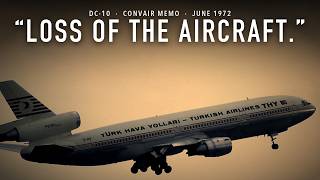 The full story · with videoThe warning nobody sent: the DC-10's cargo door and Turkish Airlines Flight 981

Loading live positions…
In the wild

History
The DC-10 was Douglas's answer to the 747, and the airplane whose troubles shaped modern airworthiness rules. In 1966 American Airlines asked manufacturers for a widebody smaller than the 747, able to use existing gates and runways; Douglas, newly merged into McDonnell Douglas, answered with a three-engine design, one engine under each wing and a third through the base of the tail fin. American and United ordered it in 1968 and the first DC-10 flew on August 29, 1970. American put it into service on August 5, 1971, Los Angeles to Chicago, beating Lockheed's similar L-1011 TriStar by a year.
The DC-10-10 was the domestic version with General Electric CF6-6 engines. The DC-10-30, with a bigger wing, a third main landing gear under the fuselage and CF6-50 engines, could fly 5,200 nautical miles and became the intercontinental workhorse of the 1970s for KLM, Lufthansa, Swissair, Air New Zealand and many others; the -40 was the same airplane with Pratt & Whitney JT9Ds for Northwest and JAL. McDonnell Douglas built 386 DC-10s plus 60 KC-10 Extender tankers for the US Air Force, ending production in 1989.
Its safety record defined it. In June 1972 a rear cargo door blew off an American DC-10 over Windsor, Ontario, and the crew landed safely; the fix was handled by voluntary service bulletins under what became known as the "gentleman's agreement" between Douglas and the FAA. In March 1974 the same door failed on Turkish Airlines Flight 981 near Paris, killing all 346 on board, then the deadliest crash in history. In May 1979 American Flight 191 lost an engine on takeoff at Chicago and crashed, killing 273, and the FAA grounded every DC-10 for five weeks. Later investigations blamed maintenance rather than the design, but the DC-10's reputation never fully recovered, even as the type flew safely for decades afterward.
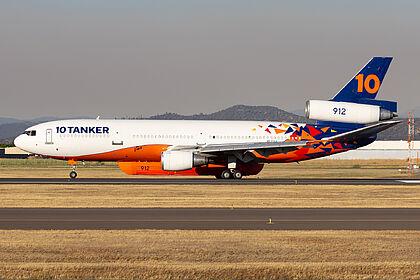
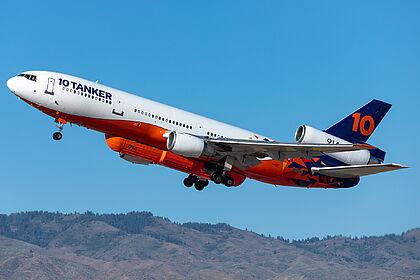
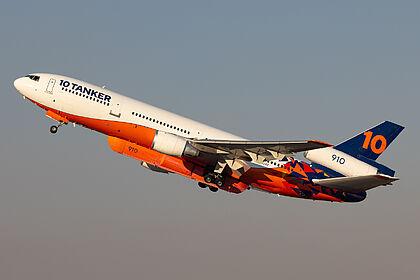
Those decades were mostly as a freighter. FedEx bought dozens and converted them to two-crew MD-10s in the 2000s; the stretched MD-11 descended directly from the DC-10. The last passenger flight was Biman Bangladesh's in February 2014, FedEx retired the MD-10 in 2023 and the Air Force retired the KC-10 in 2024. The DC-10s still flying in 2026 are mostly 10 Tanker Air Carrier's converted -30s, dropping fire retardant on American and Australian wildfires.
Specifications
- First flight
- 1970
- Entered service
- 1971
- Engines
- 3 × GE CF6-6 (-10), GE CF6-50 (-30), or Pratt & Whitney JT9D (-40)
- Typical seating
- 270 (2-class)
- Cruise speed
- Mach 0.82
- Range
- 5,200 nm
- MTOW
- 251,744 kg
- Length
- 55.35 m
- Wingspan
- 50.39 m
- Status
- Production ended
Design notes
The DC-10's signature is its tail engine, mounted in a straight-through nacelle at the base of the vertical fin rather than through an S-duct inside the fuselage as on the L-1011 and 727. The straight duct is simpler and lets the engine be changed without disturbing the fin, at the cost of a heavier tail structure and a fin that starts above the engine. The fuselage is 6.02 meters wide, enough for eight- or nine-abreast economy with two aisles and the same LD3 containers as the 747.
The wing differs by version. The DC-10-10 has a 47.3-meter span; the -30 and -40 have a 50.4-meter span with extended tips, a heavier structure and a two-wheel center main landing gear under the fuselage that spreads their 252-ton takeoff weight. Engines are three General Electric CF6-6s on the -10, CF6-50s on the -30 and Pratt & Whitney JT9Ds on the -40, each around 40,000 to 54,000 pounds of thrust.
The flight deck is a three-crew 1970s layout with a flight engineer, which is the main thing the MD-10 conversion changed: FedEx fitted the MD-11's two-crew glass cockpit to its DC-10s so one pilot pool could fly both. The outward-opening lower cargo doors that failed in 1972 and 1974 were redesigned with positive locks and visual indicators after the Paris crash, and the cabin floor was strengthened and vented, changes that were then required on every widebody.
Notable facts
- The three-engine widebody with one engine through the tail fin. First flight August 29, 1970; into service with American Airlines in August 1971. 386 were built through 1989, plus 60 KC-10 tankers for the US Air Force.
- Its outward-opening cargo door failed over Windsor, Ontario in 1972 and again on Turkish Airlines Flight 981 in 1974, the deadliest crash of its time; the rules for cargo doors and cabin floors were rewritten afterward.
- The last passenger DC-10 flight was in 2014. FedEx's two-crew MD-10 conversions retired in 2023 and the Air Force retired the KC-10 in 2024, so the DC-10s still flying are mostly 10 Tanker's firefighting air tankers.
- The MD-11 is its stretched, re-winged successor. Figures above are for the long-range DC-10-30; the domestic -10 has a shorter wing and a 195-ton takeoff weight.
Who flies it
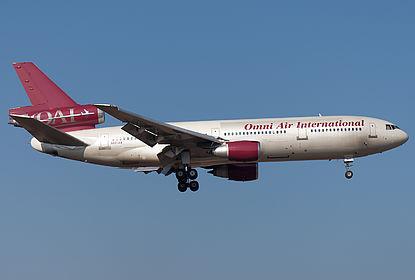
The DC-10 has almost no commercial operators left. The last passenger service ended in 2014 and FedEx, long the largest operator, retired its final MD-10 in 2023. The US Air Force flew the KC-10 Extender, a DC-10-30CF-based tanker and transport, until September 2024. What remains is a small, specialized fleet: 10 Tanker Air Carrier of Albuquerque converts DC-10-30s into very large air tankers that drop about 9,400 gallons of retardant in a pass, and these fly wildfire contracts across the western United States and, in the southern summer, Australia. A handful of other airframes survive in storage, with Omni Air having retired its passenger -30s in the 2000s. On a tracker, a DC10 is almost certainly a tanker, and the site's air tanker page follows them by registration.
Flying on one
No one flies as a passenger on a DC-10 anymore; the last scheduled flights were in 2014. For most of its career it was a comfortable airplane. Economy was usually nine-abreast in 2-5-2, with the five-seat center block the one to avoid and the side pairs the prize; some airlines fitted 2-4-2 for a roomier cabin, and charter operators squeezed in 3-4-3. The widebody cabin, 1970s pressurization and three big engines made it quieter and smoother than the narrowbodies of its day, though the rear rows under the tail engine were loud. Business travelers in the 1980s and 1990s came to know it on long routes for KLM, Lufthansa, Continental and Northwest, and in its final passenger years with Biman Bangladesh, which sold seats on farewell flights to enthusiasts in 2014.
Variants
- DC-10-10 — Original US domestic version, CF6-6 engines
- DC-10-30 — Intercontinental version with a center landing gear and larger wing
- DC-10-40 — JT9D-powered version for Northwest and JAL
- MD-10 — FedEx conversion with the MD-11's two-crew cockpit
- KC-10 Extender — US Air Force tanker/transport based on the -30CF
How to spot it
Three engines, one of them sitting in a straight tube at the base of the tail fin, with the fin rising above it: that is a DC-10 or its descendant, the MD-11. Telling the two apart is easy from the wingtips, since every MD-11 has winglets and no DC-10 does, and from the length, the MD-11 being nearly six meters longer with a smaller horizontal tail. Against the Lockheed L-1011, now extinct, the DC-10's tail engine is a visible pod rather than buried in the fuselage. The DC-10-30 and -40 have a center landing gear under the belly and longer wingtips than the -10. A DC-10 in white and red with a large tank under the belly is a 10 Tanker air tanker, the most likely DC-10 anyone will see today.
Frequently asked
Are any DC-10s still flying?
A few. 10 Tanker Air Carrier flies converted DC-10-30s as firefighting air tankers in the United States and Australia. Passenger service ended in 2014, FedEx retired its MD-10 freighters in 2023 and the US Air Force retired the KC-10 in 2024.
What is the difference between the DC-10 and the MD-11?
The MD-11 is a stretched, modernized DC-10 with winglets, a smaller horizontal tail, more efficient engines and a two-crew glass cockpit. Every MD-11 has winglets and no DC-10 does, which is the quickest way to tell them apart.
Why was the DC-10 grounded in 1979?
After American Airlines Flight 191 crashed at Chicago in May 1979, when an engine separated on takeoff, the FAA revoked the DC-10's type certificate for five weeks while the cause was investigated. It was traced to an improper engine-change procedure rather than the design, and the fleet returned to service.
What was wrong with the DC-10's cargo door?
The original outward-opening cargo door could appear locked when it was not, and in 1972 and 1974 doors opened in flight, collapsing the cabin floor and damaging the controls. After the 1974 Paris crash the doors were redesigned and the rules for cargo doors and cabin floors on all widebodies were rewritten.
What is an MD-10?
A FedEx DC-10 refitted with the MD-11's two-crew cockpit, letting the airline fly both types with one pilot pool. FedEx retired the last MD-10 in 2023. The conversion kept the DC-10's ICAO code, DC10.
What aircraft is DC10?
DC10 is the ICAO type designator for the McDonnell Douglas DC-10, a McDonnell Douglas widebody that first flew in 1970. It is the code flight trackers and air traffic control use.
What is the wingspan of the McDonnell Douglas DC-10?
The McDonnell Douglas DC-10 has a wingspan of 50.39 m (165 ft) and is 55.35 m (182 ft) long.
What engines does the McDonnell Douglas DC-10 have?
Three GE CF6-6 (-10), GE CF6-50 (-30), or Pratt & Whitney JT9D (-40).
What is the MTOW and range of the McDonnell Douglas DC-10?
Maximum takeoff weight is 251,744 kg (554,995 lb) and maximum range is about 5,200 nautical miles (9,630 km) at a cruise of Mach 0.82.
How many passengers does the McDonnell Douglas DC-10 carry?
Typically 270 passengers in a two-class layout; dense single-class layouts seat more and premium-heavy layouts fewer.
Compare with
Specs are approximate, compiled from public sources. See our editorial policy.