Boeing 737-900ER
B739Boeing · Narrowbody · Production ended
In the wild
History
The Boeing 737-900ER is the largest and final member of the 737 Next Generation family, itself the third major generation of the long-running 737 line that first flew in the 1960s. Boeing launched the Next Generation programme in the 1990s to answer the Airbus A320 family, giving the 737 a new wing, more powerful and efficient CFM56-7B engines, a modern glass cockpit, and higher weights and speeds. The family spanned four lengths, the -600, -700, -800, and -900, and the -900 was the longest, aimed at carriers wanting maximum single-aisle capacity.
The original 737-900, introduced in 2001, had a problem: although it stretched the fuselage beyond the -800, it kept the same exit-door layout and fuel capacity, which capped its certified seating and limited its range. It sold poorly as a result. Boeing addressed both shortcomings with the 737-900ER, for Extended Range, launched in 2005. The -900ER added a pair of exit doors aft of the wing, allowing far higher certified seating, along with optional auxiliary fuel tanks and a strengthened, higher-weight structure that restored the range airlines needed. It first flew in 2006 and entered service in 2007 with launch customer Lion Air.
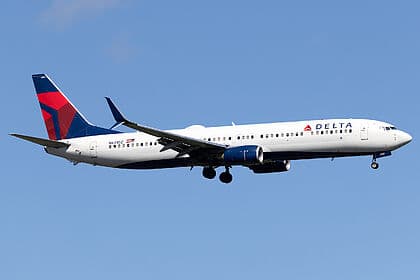
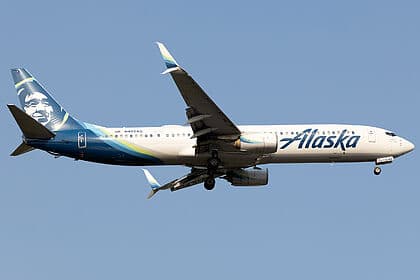
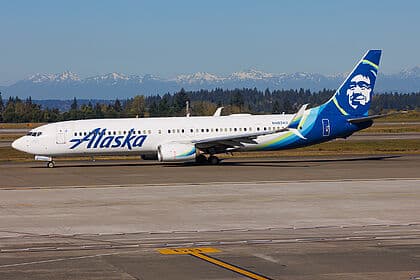
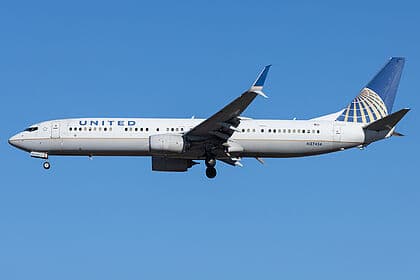
With those changes the -900ER became a credible competitor to the Airbus A321, offering up to around 220 seats in a single-class layout. It never matched the sales of the smaller, more versatile 737-800, but it found a solid niche with high-capacity operators. In the United States it became a mainstay for Alaska Airlines, Delta Air Lines, and United Airlines on busy domestic trunk routes, while Lion Air and others used it for dense leisure and regional flying. Total deliveries came to just over 500 aircraft.
Boeing ended 737NG passenger production around 2019 as it switched the line to the re-engined 737 MAX, with the MAX 9 and later MAX 10 taking over the large-narrowbody role. The final commercial 737NG was delivered in early 2020. As of 2026 the 737-900ER remains in widespread front-line service, particularly with major US carriers, and is likely to keep flying for many years, though it is gradually being joined and in time replaced by MAX-generation aircraft. Because it was built in relatively large numbers late in the NG run, the -900ER fleet is comparatively young, and there has so far been little move to convert it to freighters, unlike the older, smaller 737 Classics. For now it remains one of the most numerous large single-aisle jets in North American skies, a familiar sight at major domestic hubs.
Specifications
- First flight
- 2006
- Entered service
- 2007
- Engines
- 2 × CFM International CFM56-7B
- Typical seating
- 180 (2-class)
- Cruise speed
- Mach 0.785
- Range
- 3,200 nm
- MTOW
- 85,139 kg
- Length
- 42.11 m
- Wingspan
- 35.79 m
- Status
- Production ended
Design notes
The 737-900ER is a maximum-length stretch of a fundamentally 1960s fuselage cross-section, and much of its engineering is about extracting capacity and range from that constraint. The most visible change over the base 737-900 is the extra pair of exit doors aft of the wing, added so the aircraft could be certified to evacuate the higher passenger numbers its length allowed; airlines that seat fewer passengers sometimes deactivate and fair over them.
The wing is the Next Generation design, larger and re-profiled compared with earlier 737s, and most -900ERs wear tall blended winglets that improve range and fuel burn. Power comes from the CFM International CFM56-7B, the sole engine for the family, housed in the 737's characteristic flattened-bottom nacelles, a shape forced by the type's low ground clearance. Optional auxiliary fuel tanks in the cargo hold give the extended range that names the variant.
Inside, the -900ER uses the Next Generation flight deck with electronic displays and shares a common type rating across the 737 family, easing crew training. The cabin can be fitted with the Boeing Sky Interior, with sculpted sidewalls and LED lighting. Structurally it remains an aluminium airframe with higher weights and reinforcement rather than any radical new technology, making it an evolution of a long-established design rather than a clean-sheet aircraft.
Notable facts
- The largest and final member of the Boeing 737 Next Generation family.
- The Extended Range (ER) model added optional auxiliary fuel tanks and higher weights over the base 737-900.
- Adds an extra pair of exit doors aft of the wing so it can be certified for higher seating than the 737-900.
- Superseded by the re-engined 737 MAX 9; Boeing ended 737NG passenger production around 2019.
- A single-aisle mainstay for US carriers such as Alaska, Delta, and United, and for Lion Air, its launch customer.
Who flies it
As of 2026 the 737-900ER is flown mostly by large mainline carriers that value its high single-aisle capacity. In the United States it is a core fleet type for Alaska Airlines, Delta Air Lines, and United Airlines, which use it on busy domestic and near-international trunk routes where its roughly 180 to 220 seats help control costs on high-demand markets. Launch customer Lion Air and other Asian low-cost and leisure carriers operate large numbers on dense regional and holiday routes. It typically flies in one- or two-class layouts on short- to medium-haul sectors, competing directly with the Airbus A321. Because the fleet is relatively young and still efficient by narrowbody standards, most examples remain in front-line passenger service rather than moving to secondary operators or cargo roles, though MAX-generation jets are gradually arriving alongside them.
Flying on one
The 737-900ER is the longest of Boeing's Next Generation 737s, and to a passenger it feels much like a 737-800 with more rows. The cabin is the familiar six-abreast 3-3 at around seventeen inches a seat — a touch narrower than an A320-family jet — and because it is a long stretch there is a lengthier walk to the back and a slower boarding shuffle. Many -900ERs wear Boeing's Sky Interior, with sculpted sidewalls and larger pivoting overhead bins that hold more roll-aboards; older cabins have smaller bins that fill faster. Engine noise and ride are typical of the 737 family. Airlines pack these densely on high-demand domestic routes, so legroom depends heavily on the operator. For the best seat, an over-wing exit row buys extra legroom, and a forward window keeps you clear of the aft galley and lavatory queues; the very back rows by the rear galley, often with little or no recline, are the ones to avoid. It is a high-capacity, efficient single-aisle.
Who flies it, and how
2 airline cabin layouts of the Boeing 737-900ER in our dataset — expand any to see the cabin breakdown and seat map.
Alaska737-900ER178 seats16F · 162Y
- First (First): 16 seats, 2-2 across
- Economy (Premium Class): 24 seats, 3-3 across
- Economy (Main Cabin): 138 seats, 3-3 across
Premium Class count varies by source (AeroLOPA / 2026 guides: 24; Wikipedia: 30; SeatGuru: 42) — all totalling 178. Using 24 (Premium rows 6-9), the current published seat map.
Delta737-900ER180 seats20F · 160Y
- First (First): 20 seats, 2-2 across
- Economy (Delta Comfort+): 21 seats, 3-3 across
- Economy (Main Cabin): 139 seats, 3-3 across
Dominant config (~130 aircraft): 20F/21 Comfort+/139 Main = 180. Small ex-lease sub-batches differ (e.g. 12F/24 Comfort+/137 Main = 173, and 12F/6 Comfort+/162 Main = 180); some are being reconfigured toward the standard layout.
Variants
- 737-900 — Original -900 without extended range, extra exits, or auxiliary tanks
- 737 MAX 9 (B38M) — Re-engined MAX-generation successor
How to spot it
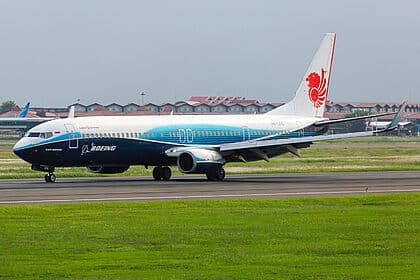
The 737-900ER is the longest 737 Next Generation, a slim single-aisle jet with the family's pointed nose, flattened-bottom engine nacelles, and usually tall blended winglets. The clearest cue separating it from the shorter 737-800 is length, plus the extra pair of exit doors set aft of the wing, which the -800 lacks. Telling it from the 737 MAX 9, which is a similar length, is harder: the MAX has distinctive split-tip winglets that point both up and down, and larger-diameter LEAP engines with a subtly different, serrated nacelle, whereas the -900ER has conventional upward blended winglets. Against the Airbus A321, the 737 sits lower on shorter gear, has the flat-bottomed nacelles, and lacks the Airbus wingtip fences or Sharklets and the smoother Airbus nose.
Frequently asked
How do you tell a 737-900ER from a 737-800?
The two share the same nose, engines, and winglets, so the giveaways are length and doors: the -900ER is noticeably longer and carries an extra pair of exit doors just aft of the wing, which the -800 does not have. Counting cabin windows also helps, as the -900ER has more. From head-on the two are very hard to distinguish.
How is the 737-900ER different from the original 737-900?
The -900ER, for Extended Range, added a pair of aft exit doors so it could be certified for higher seating, plus optional auxiliary fuel tanks and a higher-weight structure that restored range. The original 737-900 kept the -800's doors and fuel capacity, which capped its seats and range and hurt sales. Externally the extra doors are the main visible difference.
How do you tell a 737-900ER from a 737 MAX 9?
They are close in length, so look at the wingtips and engines: the MAX 9 has split-tip winglets that extend both above and below the wing, while the -900ER has conventional upward-only blended winglets. The MAX also has larger-diameter LEAP engines with a different, serrated nacelle. The MAX's distinctive tailcone is a further cue.
Is the 737-900ER still in production?
No. Boeing ended 737 Next Generation passenger production around 2019, delivering the last commercial NG in early 2020, and switched the line to the re-engined 737 MAX. The MAX 9, and later the MAX 10, took over the large-narrowbody role. Existing -900ERs remain in widespread service as of 2026.
What airlines fly the 737-900ER?
In the United States it is a major fleet type for Alaska Airlines, Delta Air Lines, and United Airlines, which use it on high-demand domestic routes. Launch customer Lion Air and other Asian carriers operate large numbers on dense regional and leisure services. It is generally chosen where a single-aisle jet needs to carry as many passengers as possible.
Compare with
Specs are approximate, compiled from public sources. See our editorial policy.