Airbus A330-900
A339Airbus · Widebody · In production
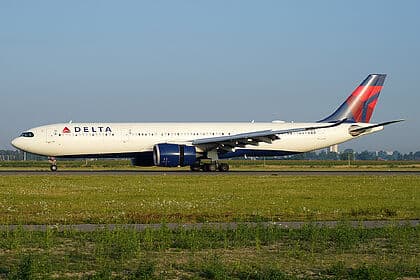
In the wild
History
The Airbus A330-900 is the larger of two members of the A330neo family, a re-engined and aerodynamically updated development of the long-running A330. By the early 2010s the original A330, in service since 1994, remained a strong seller but faced new-generation twins, notably the Boeing 787, that promised markedly lower fuel burn. Rather than design a clean-sheet replacement, Airbus chose to update the existing aircraft, launching the A330neo, for new engine option, at the Farnborough Airshow in July 2014.
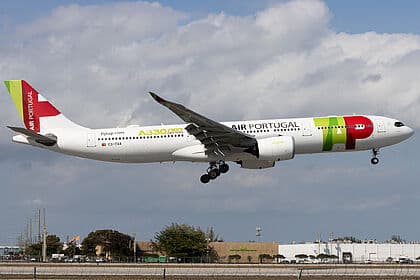
The programme covered two variants: the A330-800, a direct successor to the A330-200, and the larger A330-900, successor to the popular A330-300. The -900 first flew on 19 October 2017 and entered service with launch customer TAP Air Portugal in late 2018, with the first commercial services flown in December.
The neo's improvements centre on new engines and a new wing. It is powered exclusively by the Rolls-Royce Trent 7000, derived from the Trent 1000 used on the 787, and fitted with a longer composite wing carrying curved sharklet wingtips adapted from the A350. Together with cabin and aerodynamic refinements, Airbus quoted a double-digit percentage reduction in fuel burn per seat compared with the original A330. Crucially, the neo retained a high degree of commonality with earlier A330s, letting operators fold it into existing fleets and pilot pools with little disruption.
Airbus positioned the A330-900 as a lower-capital alternative to the 787, arguing that its lower purchase price offset a modest fuel disadvantage, especially for airlines already flying the A330. It seats roughly 260 to 300 passengers in typical layouts and has a range around 7,200 nautical miles. The type has sold steadily rather than spectacularly; it has found a home with a mix of full-service carriers, leisure operators and low-cost long-haul airlines, and became an important widebody for lessors placing aircraft with second-tier carriers.
The smaller A330-800 has struggled by comparison, taking only a handful of orders, with Kuwait Airways and Uganda Airlines among its few customers, so the family in practice rests on the -900. The A330-900's commercial fate is best read as a solid, pragmatic success rather than a market-leading one: it does not match the outright efficiency of the newest composite twins, but its combination of modern engines, low acquisition cost and fleet commonality has kept it relevant. For enthusiasts it is significant as the aircraft that extended the A330 line well past its original design life and gave one of the most-produced widebodies in history a second commercial act.
Specifications
- First flight
- 2017
- Entered service
- 2018
- Engines
- 2 × Rolls-Royce Trent 7000
- Typical seating
- 287 (2-class)
- Cruise speed
- Mach 0.82
- Range
- 7,200 nm
- MTOW
- 251,000 kg
- Length
- 63.66 m
- Wingspan
- 64 m
- Status
- In production
Design notes
The A330neo's most visible changes over the original A330 are at the wingtips and the engines. The wing was extended in span to about 64 metres and fitted with tall, curved sharklet wingtips derived from the A350, replacing the small wingtip fences of the older A330. The Rolls-Royce Trent 7000, the neo's sole engine, is larger in diameter than the engines of the original A330 and, unusually among current Trents, retains a bleed-air system rather than the bleedless architecture of the 787's Trent 1000.
Inside, Airbus fitted the Airspace cabin, with revised sidewalls, larger overhead bins and updated lighting, and a slightly rearranged layout that recovered space for a few additional seats. The fuselage cross-section, and therefore the eight-abreast economy standard, is unchanged from the original A330, as is much of the systems architecture, which is why the neo retains a common type rating with earlier A330s.
The aircraft keeps Airbus fly-by-wire controls and sidesticks. Structurally it remains a predominantly metal aircraft, in contrast to the largely composite A350 and 787, which is part of why it is cheaper to buy but slightly less efficient. The nose and cockpit windows are essentially those of the original A330, without the dark cockpit surround of the A350. Maximum take-off weight rose to around 251 tonnes to support the higher weights and longer range.
Notable facts
- Re-engined development of the A330, marketed as the A330neo.
- Powered by the Rolls-Royce Trent 7000, with a new longer composite wing and sharklets derived from the A350.
- Entered service with TAP Air Portugal in December 2018.
- Offered as a lower-cost alternative to new-generation twins like the Boeing 787.
- The shorter A330-800 (ICAO A338) completes the family but sold in small numbers.
Who flies it
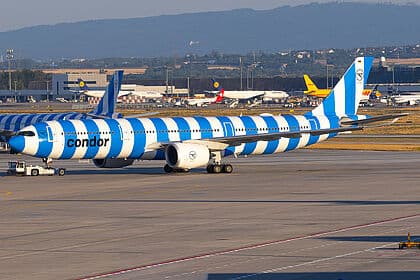
The A330-900 is flown by a varied mix of operators. Launch customer TAP Air Portugal uses it as a long-haul backbone; other operators include Delta Air Lines, which has a substantial fleet, along with carriers such as Aer Lingus, Air Mauritius, Corsair, Cebu Pacific and various leisure and low-cost long-haul airlines. Lessors have placed a good number with second-tier carriers, so the type appears widely across Europe, Asia, Africa and the Americas.
Typical roles are medium and long-haul routes where an operator wants a modern widebody without the capital cost of an all-new composite twin. Some low-cost long-haul carriers use it in high-density layouts to hold down seat costs, while full-service airlines fit more premium seating for intercontinental work. It commonly replaces older A330s and other ageing widebodies on established routes.
Flying on one
The A330neo carries over one of the quiet strengths of the A330 family: an eight-abreast economy cabin in a 2-4-2 layout. That arrangement is friendlier than the nine- and ten-abreast twins — the side pairs are ideal for couples, and no one is ever more than one seat from an aisle except the two central middles. Seat width is competitive, usually around seventeen to eighteen inches. As a "neo" it pairs newer, quieter engines with Airbus's Airspace cabin, which brings larger overhead bins, subtler mood lighting and a more modern feel than an older A330. It is a comfortable, unremarkable-in-a-good-way medium- and long-haul ride, and the bins take roll-aboards without trouble. For the best seat, the 2-4-2 window pairs on the A and K side are the prize — a window, an aisle, and no neighbour to climb over; avoid the central block in the last rows near the galleys.
Variants
- A330-800 (A338) — Shorter A330neo variant; few sold
How to spot it
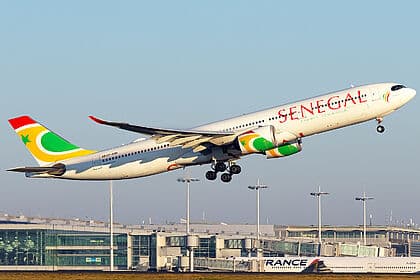
The A330neo is easiest to separate from the original A330 by its wingtips: the neo has tall, curved sharklets adapted from the A350, whereas the older A330 has small, near-vertical wingtip fences. The neo's Trent 7000 engines are also visibly larger.
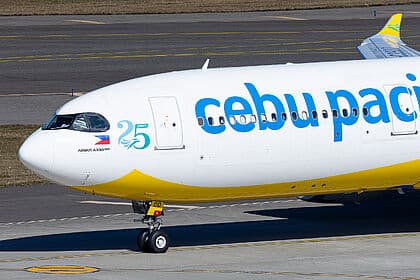
Against the A350, which has similar curved wingtips, look at the cockpit and nose. The A350 wears a dark, curved surround around the flight-deck windows, often called a mask, and has a sharply pointed nose; the A330neo keeps the plainer, rounder A330 nose with conventional cockpit windows and no mask. The A330neo is also a slightly smaller aircraft with a narrower fuselage. Both are twin-engine Airbus widebodies with two Rolls-Royce engines, so the cockpit surround and nose profile are the most reliable tells.
Frequently asked
How do you tell an A330neo from the older A330?
The quickest cue is the wingtips. The A330neo has tall, curved sharklets adapted from the A350, while the original A330 has small, roughly vertical wingtip fences. The neo's Rolls-Royce Trent 7000 engines are also noticeably larger in diameter than the older aircraft's engines.
How do you tell an A330neo from an A350?
Both have curved, upswept wingtips and two Rolls-Royce engines, so look at the front of the aircraft. The A350 has a dark, curved surround around its cockpit windows, often described as a mask, and a sharply pointed nose. The A330neo keeps the plainer, rounder A330 nose with ordinary cockpit windows and no mask, and it is a somewhat smaller aircraft.
Why did Airbus build the A330neo instead of a new aircraft?
With the A350 covering the larger, longer-range end of the market, Airbus wanted a lower-cost, modernised widebody to keep the A330 competitive against the Boeing 787. Re-engining the existing aircraft was far cheaper and faster than a clean-sheet design and preserved commonality with the many A330s already flying. The result offered much of the efficiency gain at a lower purchase price.
What engine does the A330-900 use?
The A330-900 is powered solely by the Rolls-Royce Trent 7000, a relative of the Trent 1000 used on the Boeing 787. Unlike the 787's engine, the Trent 7000 keeps a conventional bleed-air system, matching the A330's systems architecture. There is no engine choice on the neo, whereas the original A330 was offered with engines from three manufacturers.
What is the difference between the A330-900 and A330-800?
They are the two members of the A330neo family. The A330-900 is the larger, higher-capacity model succeeding the A330-300, while the shorter A330-800 succeeds the A330-200 and offers a bit more range with fewer seats. The -900 has sold far better; the -800 attracted only a small number of orders.
Compare with
Specs are approximate, compiled from public sources. See our editorial policy.