Boeing 787-8 (B788)
Boeing · Widebody · In production
B788 is the ICAO aircraft type code for the Boeing 787-8, a Boeing widebody airliner that first flew in 2009 and entered service in 2011. It typically carries 248 passengers in a two-class layout, cruises at Mach 0.85, and has a range of about 7,305 nautical miles (13,529 km).
Loading live positions…
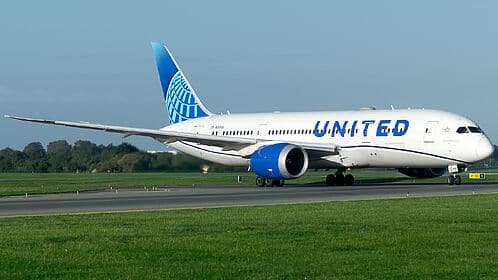
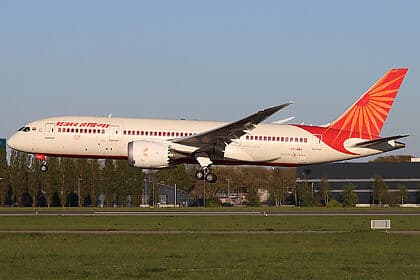
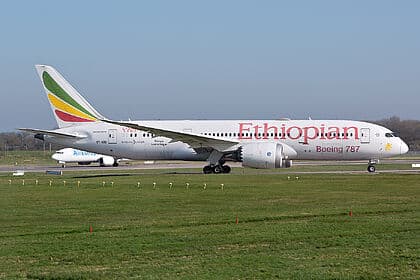
In the wild
History
The Boeing 787-8 is the aircraft that introduced the Dreamliner and, with it, the idea that a mid-size twin could fly almost any long-haul route point to point. Boeing's thinking in the early 2000s, after it abandoned the near-sonic Sonic Cruiser study, was that airlines wanted efficiency and range rather than speed, so in 2004 it launched the 7E7, soon renamed 787, with an order from ANA. The promise was a 20% reduction in fuel burn per seat over the 767 it replaced, achieved with a composite airframe, more efficient engines and a fully electric systems architecture.
Delivering that proved far harder than selling it. Boeing had outsourced large sections of the airframe to partners worldwide and assembled them in Everett, and the supply chain struggled; the rollout on 8 July 2007 was of an aircraft held together with temporary fasteners. The first flight slipped to 15 December 2009 and ANA finally took the first delivery in September 2011, more than three years late. Four months after service entry, lithium-ion battery fires on two aircraft led the FAA to ground the entire fleet in January 2013, the first grounding of a US-certified type since 1979; redesigned battery enclosures returned it to service in April.
Once flying reliably, the 787-8 did what Boeing had promised. Its range of more than 7,300 nautical miles with 240 passengers let airlines open routes a 777 could not fill: United's Denver–Tokyo, Air India's Delhi–Melbourne, Norwegian's low-cost transatlantic flights, and dozens of secondary-city pairs. Many early customers later moved up to the larger 787-9 as their routes grew, and the -8 became the smallest seller of the three variants, but it remains in production and in demand with carriers whose markets suit a 240-seat aircraft. Around 400 have been built, with the line now in South Carolina.
Specifications
- First flight
- 2009
- Entered service
- 2011
- Engines
- 2 × General Electric GEnx-1B or Rolls-Royce Trent 1000
- Typical seating
- 248 (2-class)
- Cruise speed
- Mach 0.85
- Range
- 7,305 nm
- MTOW
- 227,930 kg
- Length
- 56.72 m
- Wingspan
- 60.12 m
- Status
- In production
Design notes
Half of the 787's structure by weight is carbon-fibre composite, including the one-piece barrel fuselage sections and the wing, which lets Boeing use larger windows, a lower cabin altitude of 6,000 ft and higher humidity, because composites do not corrode or fatigue the way aluminium does. The electric architecture replaced engine bleed air for cabin pressurisation, wing anti-ice and engine start, with large generators on each engine and the lithium-ion batteries that caused the 2013 grounding.
The wing has a very high aspect ratio and raked tips with no winglets, and flexes visibly in flight; the trailing edge uses a variable-camber system that trims the flaps in cruise. Engines are either GE's GEnx-1B or Rolls-Royce's Trent 1000, both with serrated 'chevron' nacelle exhausts for noise, and the two are interchangeable on the airframe. The cockpit uses large displays and a head-up display, and the -8 shares a type rating with the -9 and -10 and, with differences training, the 777.
Notable facts
- The original Dreamliner and the first airliner with a composite fuselage and wings, which cut weight and allowed a lower cabin altitude.
- ANA flew the first commercial service in October 2011 after a development programme more than three years late.
- Grounded worldwide for three months in 2013 after lithium-ion battery fires; redesigned battery enclosures fixed it.
- Opened dozens of long, thin routes that could not support a 777 or A330, from Boston–Tokyo to Perth–London (on the -9).
- The smallest 787; many early operators have since moved to the longer -9, but the -8 remains in production and in demand with Air India, American and others.
Who flies it
ANA and Japan Airlines, the launch operators, still fly large 787-8 fleets on domestic trunk routes and to Asia and North America. American Airlines, United, Air Canada and Aeroméxico use it across the Atlantic and Pacific; British Airways, LOT, Air Europa, TUI and Norse Atlantic operate it from Europe; Air India, Qatar Airways, Ethiopian, Kenya Airways, Royal Brunei and many others use it as a long-haul flagship or a flexible medium-haul widebody. Typical duties are long, thin routes of eight to sixteen hours and high-frequency medium-haul services where a 240-seat aircraft fills better than a 300-seat one.
Flying on one
The 787 was designed around passenger comfort and the -8 delivers the family's core benefits: a cabin pressurised to 6,000 ft rather than 8,000, higher humidity and quieter engines, which together leave you noticeably less dehydrated and tired after a long flight. The windows are about 30% larger than a 767's and darken electronically instead of using shades. The one thing to check is seat width: the cabin is narrower than an A350's, and while Boeing intended eight-abreast economy, almost every airline fits nine, giving a seat of about 17 inches. Overhead bins are large and pivot down, taking roll-aboards on their side. Mood lighting and the smooth composite wing make for a calm ride. For the best seat, choose a window in the forward economy cabin, ahead of the engines, and avoid the final rows beside the rear galley.
Who flies it, and how
2 airline cabin layouts of the Boeing 787-8 in our dataset — expand any to see the cabin breakdown and seat map.
American787-8234 seats20J · 28W · 186Y
- Business (Flagship Business): 20 seats, 1-2-1 across
- Premium Economy (Premium Economy): 28 seats, 2-3-2 across, 38″ pitch
- Economy (Main Cabin Extra): 48 seats, 3-3-3 across
- Economy (Main Cabin): 138 seats, 3-3-3 across, 31″ pitch
No First Class. Flagship Business uses American's bespoke 'Concept D' reverse-herringbone suite (1-2-1).
Qatar Airways787-8254 seats22J · 232Y
- Business (Business): 22 seats, 1-2-1 across
- Economy (Economy): 232 seats, 3-3-3 across, 31″ pitch
Variants
- 787-9 (B789) — 6 m longer with more range and the family's biggest seller
- 787-10 (B78X) — The longest Dreamliner, built only in South Carolina
- BBJ 787-8 — Corporate and VIP conversion
How to spot it
Dreamliners are the widebodies with the serrated, scalloped engine exhausts (the chevrons) and raked wingtips rather than winglets, on a wing that curves noticeably upward in flight. The cockpit windows are large and sweep back into the fuselage with a distinctive four-pane shape, and the nose is smooth and rounded. Telling a 787-8 from a 787-9 is about proportion: the -8 is 6 m shorter and looks stubby, with the wing and tail large for the fuselage, and it has four passenger doors per side set closer together. The -10 is longer still, with a long parallel section between the wing and tail.
Flights we've seen the Boeing 787-8 operate
From our own observations of notable flights — each links to the flight's status, on-time history and fares.
Frequently asked
What is the difference between the 787-8 and 787-9?
The 787-9 is 6.1 m longer, seats about 40 more passengers and, thanks to higher weights and more fuel, flies around 200 nautical miles further. It also has a slightly reinforced structure and hybrid laminar flow control on the tail. Most airlines that started with the -8 added or switched to the -9 as their routes grew.
Why was the 787 grounded in 2013?
Two lithium-ion battery fires, one on a parked JAL aircraft in Boston and one on an ANA flight that diverted, led regulators to ground all 50 aircraft then in service for about three months. Boeing redesigned the battery with better cell separation, a steel enclosure and a vent to the outside, and the fleet returned in April 2013.
How far can a 787-8 fly?
About 7,305 nautical miles (13,530 km) with a typical two-class load, enough for London to Perth or New York to Hong Kong, although the longest Dreamliner routes are usually flown by the -9.
Is the 787 made of plastic?
About 50% of its structure by weight is carbon-fibre-reinforced polymer, a composite, including the fuselage barrels and the wing. The rest is mostly aluminium and titanium. Composites are lighter and do not corrode, which allows the larger windows and lower cabin altitude.
What aircraft is B788?
B788 is the ICAO type designator for the Boeing 787-8, a Boeing widebody that first flew in 2009. It is the code flight trackers and air traffic control use.
What is the wingspan of the Boeing 787-8?
The Boeing 787-8 has a wingspan of 60.12 m (197 ft) and is 56.72 m (186 ft) long.
What engines does the Boeing 787-8 have?
Two General Electric GEnx-1B or Rolls-Royce Trent 1000.
What is the MTOW and range of the Boeing 787-8?
Maximum take-off weight is 227,930 kg (502,494 lb) and maximum range is about 7,305 nautical miles (13,529 km) at a cruise of Mach 0.85.
How many passengers does the Boeing 787-8 carry?
Typically 248 passengers in a two-class layout; dense single-class layouts seat more and premium-heavy layouts fewer.
Compare with
Specs are approximate, compiled from public sources. See our editorial policy.