Cessna Citation Excel/XLS
C56XCessna · Business jet · In production
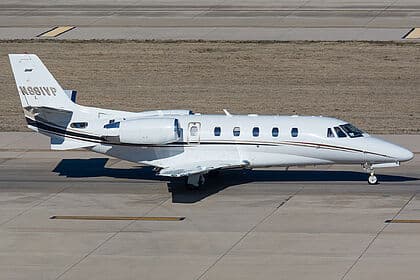
In the wild
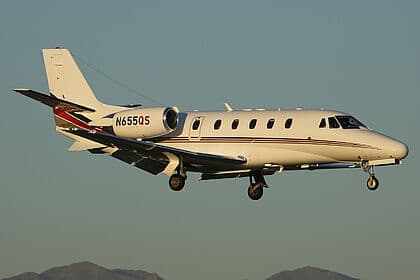
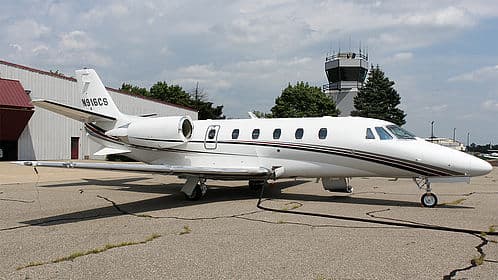
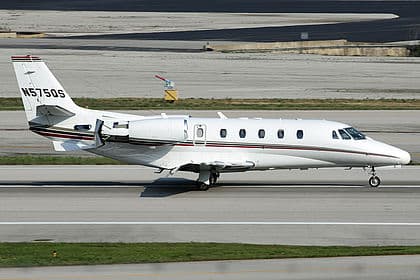
History
The Cessna Citation Excel, and the XLS and XLS Plus models that followed it, form one of the most successful mid-size business jet lines ever built, and share the ICAO type designator C56X, taken from the aircraft's model number, the 560XL. Cessna, later part of Textron Aviation, developed the Excel in the mid-1990s to offer a stand-up, mid-size cabin at operating costs closer to those of a light jet. The design mated a shortened version of the Citation X's fuselage with a new, straight supercritical wing and a tail from the Citation V family.
The Excel first flew on 29 February 1996 and entered service in 1998, powered by two Pratt and Whitney Canada PW545 engines. It was quickly popular, offering six to eight passengers a cabin they could stand up in, along with the ability to use shorter runways than many rivals. Cessna updated the aircraft as the Citation XLS in 2004, adding Collins Pro Line 21 avionics and improved engines, and again as the XLS Plus in 2008, with more powerful, FADEC-controlled PW545C engines and a revised nose.
The formula proved durable. More than a thousand of the 560XL family have been delivered, making it one of the best-selling business jets of any class, and a mainstay of large fractional and charter fleets. The aircraft's blend of a genuine mid-size cabin, modest running costs and short-field capability suited it to a very wide range of operators.
Textron kept the line current into the 2020s. It launched the Citation XLS Gen2 in 2022, with a new interior, larger windows and updated systems, and then, in 2023, unveiled a more thorough revision as the Citation Ascend, with new PW545D engines, a Garmin G5000 flight deck, a flat cabin floor and further cabin changes. The Ascend entered service in December 2025 and, as of 2026, is the current production member of the family, all under the same C56X designator.
The Excel and XLS therefore occupy an unusual place: a design nearly three decades old that has been repeatedly renewed rather than replaced, and remains in production in updated form. For enthusiasts and operators alike the family is significant as the aircraft that popularised the mid-size, stand-up cabin at light-jet economics, and as one of the highest-selling business jet lines in history. Its longevity is a rare example of a single airframe concept staying commercially relevant across three decades of continuous development.
Specifications
- First flight
- 1996
- Entered service
- 1998
- Engines
- 2 × Pratt & Whitney Canada PW545C
- Typical seating
- 8 seats
- Cruise speed
- Mach 0.75
- Range
- 2,100 nm
- MTOW
- 9,220 kg
- Length
- 16 m
- Wingspan
- 17.17 m
- Status
- In production
Design notes
The Citation Excel family's core idea is a mid-size, stand-up cabin carried on a comparatively light and simple airframe. To achieve it, Cessna took the wide fuselage cross-section of the Citation X, shortened it, and combined it with a straight, unswept supercritical wing derived from earlier Citations and a cruciform tail, with the horizontal stabiliser set part way up the fin. The result is a cabin passengers can stand in, at a weight and cost closer to a light jet than a traditional mid-size aircraft.
Power comes from two Pratt and Whitney Canada PW545 turbofans, mounted on pylons on the rear fuselage in the usual Citation arrangement, rather than under the wing. Successive versions have used more capable variants of the engine, from the PW545A of the Excel through the FADEC-controlled PW545C of the XLS Plus to the PW545D of the latest Citation Ascend.
The straight wing helps give the aircraft its short-runway performance and easy low-speed handling, at the cost of a lower cruise speed than swept-wing rivals; normal cruise is around Mach 0.75. Avionics have moved with the times, from the Collins Pro Line 21 suite of the XLS to the Garmin G5000 flight deck of the Ascend. Throughout, the emphasis has been on a practical, roomy cabin and dependable, economical operation rather than outright speed or range.
Notable facts
- One of the best-selling mid-size business jets ever built, with more than a thousand of the 560XL family delivered.
- Pairs a stand-up, mid-size cabin with light-jet operating costs and the ability to use shorter runways.
- Uses a straight, unswept supercritical wing, two rear-fuselage-mounted PW545 engines and a cruciform tail.
- A long-standing mainstay of large fractional and charter fleets, including NetJets.
- The line remains in production: the XLS Gen2 gave way to the updated Citation Ascend, which entered service in December 2025, all under the C56X designator.
Who flies it
The Citation Excel and XLS family is one of the most widely operated business jets in the world, flown by charter and air-taxi companies, fractional programmes, corporate flight departments and private owners. It is a particular mainstay of large fractional fleets: NetJets has long operated the XLS in significant numbers as a mid-size workhorse, and many charter operators use it for the same reasons.
Typical roles are regional and short-to-medium range business trips, where the aircraft's stand-up cabin, short-runway capability and modest operating costs suit it well. It commonly carries small groups of executives between cities that larger jets would find awkward, using secondary airports with shorter runways. As of 2026, with the updated XLS Gen2 and new Citation Ascend keeping the line current, the family remains a default choice in the mid-size charter and fractional market and appears at business airports worldwide.
Flying on one
The Cessna Citation Excel and its XLS developments are among the most popular midsize business jets in charter service, and flying on one is comfortable, practical private travel rather than ultra-long-range luxury. Its calling card is a stand-up cabin — you can walk to your seat without stooping, which is not a given in this class — seating around seven to nine passengers, usually in a club arrangement of facing chairs with a couple of extra seats. It is sized for the trips most private flights actually are: a couple of hours between regional airports, quickly and quietly, landing closer to your destination than an airliner could. The cabin is well appointed and reasonably quiet, with a small galley and a lavatory; bags go in a dedicated compartment. For the best seat, a forward club chair facing a companion works well for a short hop. Versatile, easy to charter and genuinely comfortable, it is the kind of jet that does the everyday work of business aviation.
Variants
- Citation Excel (560XL) — Original model, in service from 1998 with PW545A engines
- Citation XLS — 2004 update with Collins Pro Line 21 avionics and improved engines
- Citation XLS+ — 2008 model with FADEC-controlled PW545C engines and a revised nose
- Citation XLS Gen2 — Early-2020s refresh with a new interior and larger cabin windows
- Citation Ascend — Latest development; entered service in December 2025 with PW545D engines and a Garmin G5000 flight deck
How to spot it
The Citation Excel and XLS are mid-size business jets with two engines mounted on the rear fuselage, a straight, unswept wing without winglets, and a cruciform tail whose horizontal stabiliser sits part way up the fin. The straight wing is a useful cue, as many rivals use swept wings.
The closest comparison for spotters is the Embraer Phenom 300, a slightly smaller light jet in the same charter and fractional role. The Phenom has clearly swept wings with prominent blended winglets and a true T-tail, with the horizontal surface right at the top of the fin, whereas the Excel has a straight wing, no winglets and a mid-set cruciform tail. The Excel is also a little larger, with a taller, stand-up cabin. Later Citation Ascend examples look very similar to the XLS but carry subtle updates such as larger cabin windows.
Frequently asked
What is the difference between the Citation XLS and the Phenom 300?
Both are popular charter and fractional jets, but the Citation XLS is a mid-size aircraft with a taller, stand-up cabin, while the Embraer Phenom 300 is a light jet with a slightly smaller cabin. The Phenom is faster and more modern, with swept wings, winglets and a T-tail, and is certified for single-pilot operation; the XLS has a straight wing, a cruciform tail and is normally flown by two pilots. Buyers often choose the XLS for cabin size and short-field ability and the Phenom for speed and efficiency.
What is the difference between the Citation Excel, XLS, XLS Plus and Ascend?
They are successive developments of the same 560XL design. The Excel of 1998 was the original; the XLS of 2004 added updated avionics and engines; the XLS Plus of 2008 brought more powerful FADEC engines and a new nose; and the XLS Gen2 of the 2020s refreshed the interior. The Citation Ascend, which entered service in December 2025, is the latest version, with new PW545D engines and a Garmin G5000 flight deck, and all share the C56X type designator.
How many passengers does a Citation XLS carry?
A typical Citation XLS is configured for six to eight passengers in a stand-up, mid-size cabin, with two pilots up front. High-density layouts can seat up to around ten. In charter and fractional service it most often carries small groups of business travellers with their baggage.
Is the Citation Excel still in production?
Yes, in updated form. Although the original Excel and XLS are no longer built, the line has been continuously renewed, most recently as the Citation Ascend, which entered service in December 2025. All these models share the C56X type designator, so as of 2026 the family remains in production nearly three decades after the Excel first flew.
Why is the Citation XLS so popular for charter and fractional flying?
The XLS offers a genuine stand-up, mid-size cabin at operating costs closer to a light jet, and it can use shorter runways than many competitors, which widens the airports it can serve. Those qualities make it a versatile, economical aircraft for carrying small groups on regional trips. It has long been a mainstay of large fractional fleets such as NetJets and of charter operators worldwide.
Compare with
Specs are approximate, compiled from public sources. See our editorial policy.